Sales Automation for Small Teams: What You Actually Need
.webp)
Implementation Specialists
Blog Content
If you're running a small business in India with a team of 2-5 people, you've probably heard: "You need sales automation."
So you start researching. You see demos of expensive platforms. You read about complex workflows. You hear terms like "lead scoring," "drip campaigns," and "multi-channel sequences."
And you think: "This isn't for us. We're too small for this."
Here's the truth: You're right to be skeptical. But you're wrong about what automation means.
Sales automation for small teams isn't about tools. It's about structure. And you don't need a big budget or a tech team to get started.
Why Most MSMEs Overcomplicate Sales Automation
When small business owners hear "sales automation," they imagine:
- Expensive software subscriptions
- Complex setup processes
- Training their team on new tools
- Integrations and technical headaches
No wonder they avoid it.
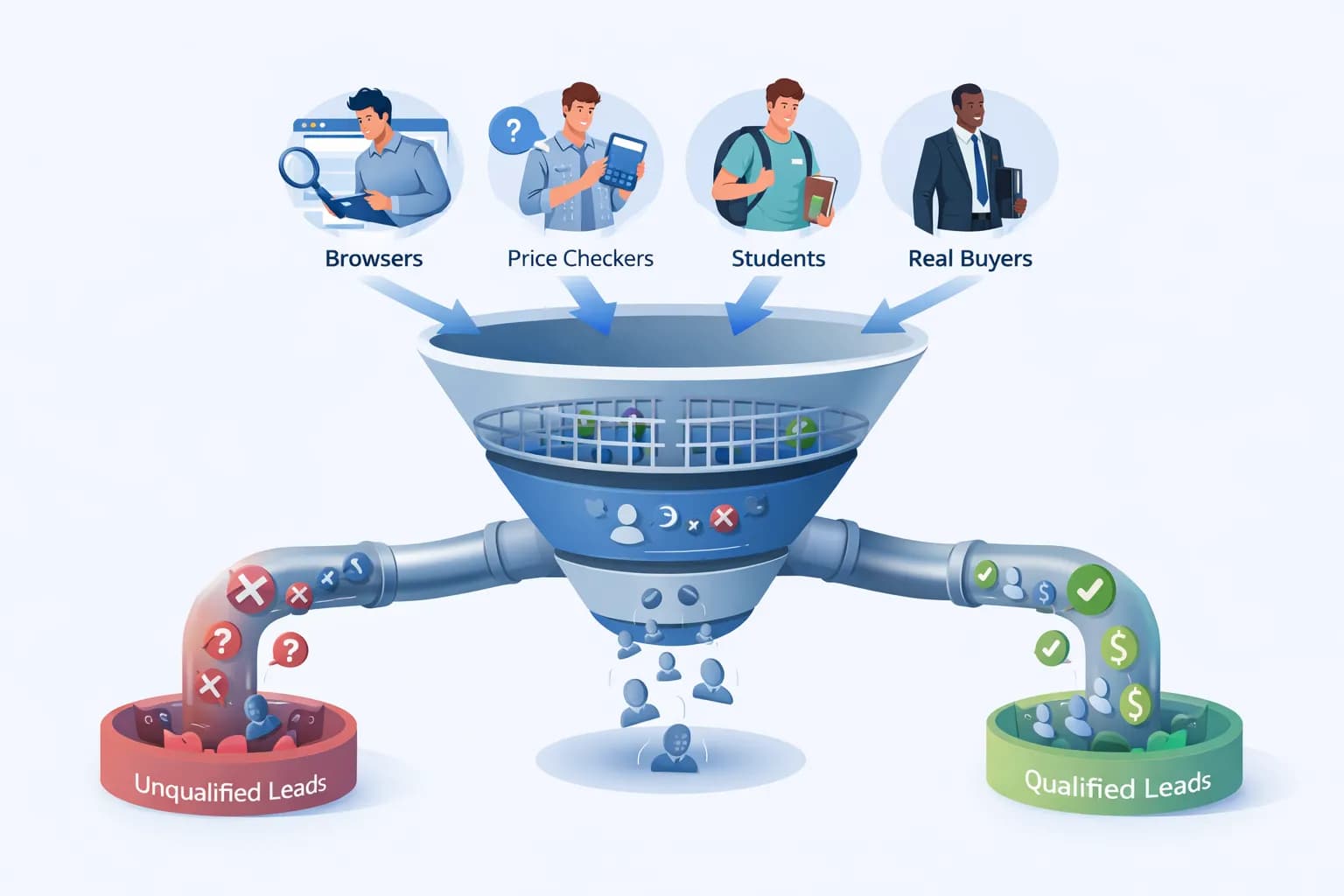
But here's what automation actually means for a small team: Doing the right things consistently, without relying on memory.
That's it.
You're not replacing people. You're supporting them with structure.
The Myth: Automation = Expensive Tools
Let's clear this up: You don't need fancy software to automate your sales process.
What you need:
- A way to capture every inquiry (even a spreadsheet works)
- A process for who responds and when
- A follow-up schedule that doesn't depend on someone remembering
- A way to track what stage each lead is in
This isn't about technology. It's about discipline.
Example:
A small consulting firm in Pune has 3 people. They get 20-30 inquiries per month.
Before automation:
- Inquiries came via email, WhatsApp, website form
- No one knew who was following up with whom
- Some leads got 3 responses, others got none
- Manual follow-up was killing their sales
After automation (no new tools):
- All inquiries logged in one shared spreadsheet
- One person assigned per inquiry (rotation system)
- Standard response templates for Day 1, Day 3, Day 7
- Weekly review of all open leads
Result: They didn't buy software. They built a system. And their conversion rate doubled.
What Small Teams Actually Need (And Don't Need)
Let's break this down:
You DON'T Need
- AI-powered lead scoring
- Multi-channel marketing automation
- Advanced analytics dashboards
- Integration with 10 different tools
You DO Need
- A single place to track all inquiries
- Clear ownership (who's responsible for each lead)
- Response templates (so you're not writing from scratch every time)
- A follow-up schedule (so nothing falls through cracks)
The difference between these two lists? The first is about impressing people. The second is about getting work done.
Three Types of Automation (And What Matters for Small Teams)
Not all automation is the same. Here's what you need to understand:
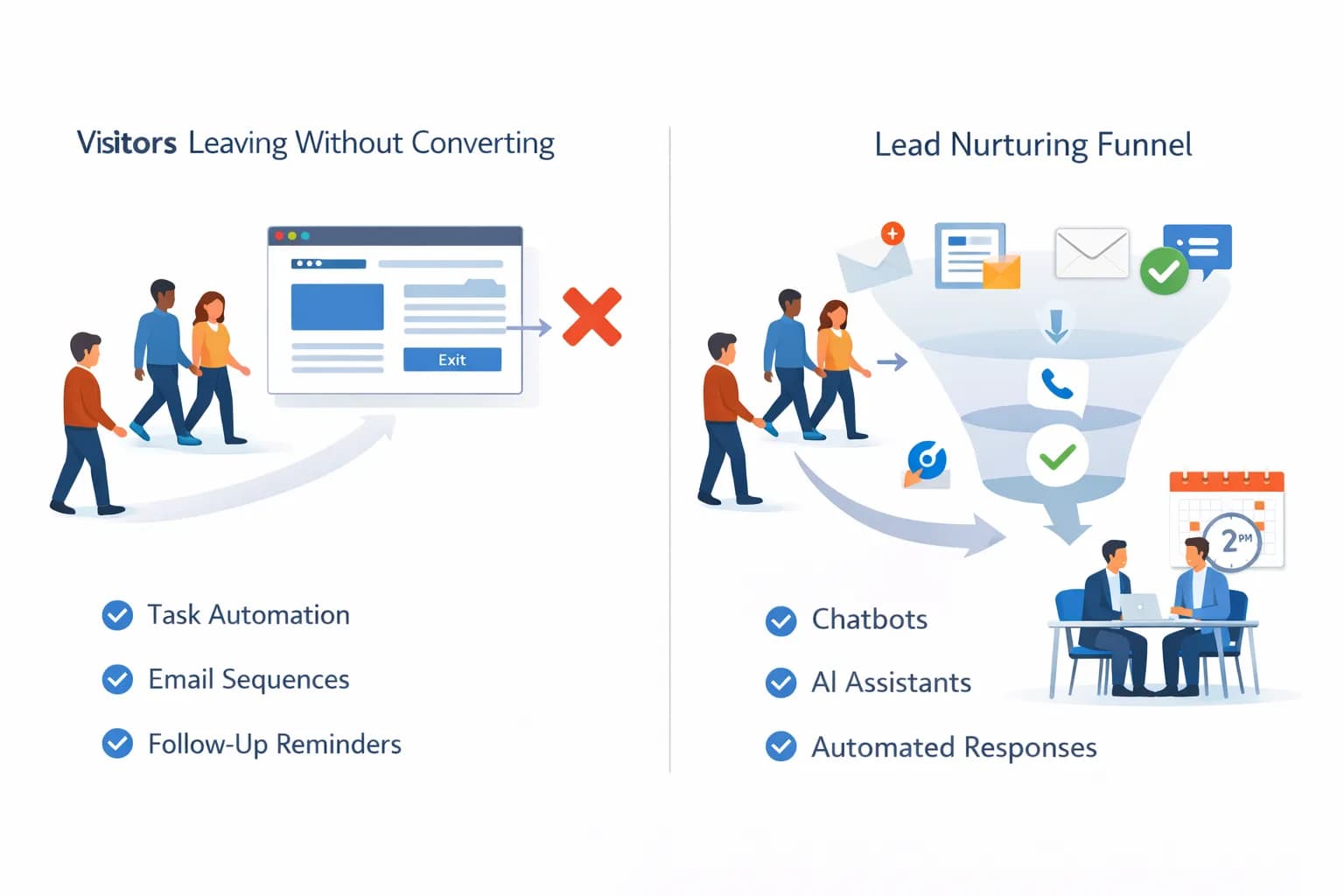
1. Activity Automation
This is automating repetitive tasks:
- Sending a "We received your inquiry" email
- Adding a lead to your tracking sheet
- Setting a reminder to follow up in 3 days
For small teams: This is useful, but not critical. You can do this manually if you have a process.
2. Decision Automation
This is automating decisions based on rules:
- If lead asks about pricing → send pricing guide
- If lead doesn't respond in 7 days → send follow-up email
- If lead fills "urgent" field → notify owner immediately
For small teams: This is where real value starts. You're not making the same decisions over and over.
3. Conversation Automation
This is automating actual conversations (chatbots, auto-responders).
For small teams: Usually not worth it. Personal responses build more trust than automated ones.
Focus on decision automation first. That's where small teams get the most value.
A Simple Sales Automation Framework for Small Teams
You don't need a complex system. You need these four steps:
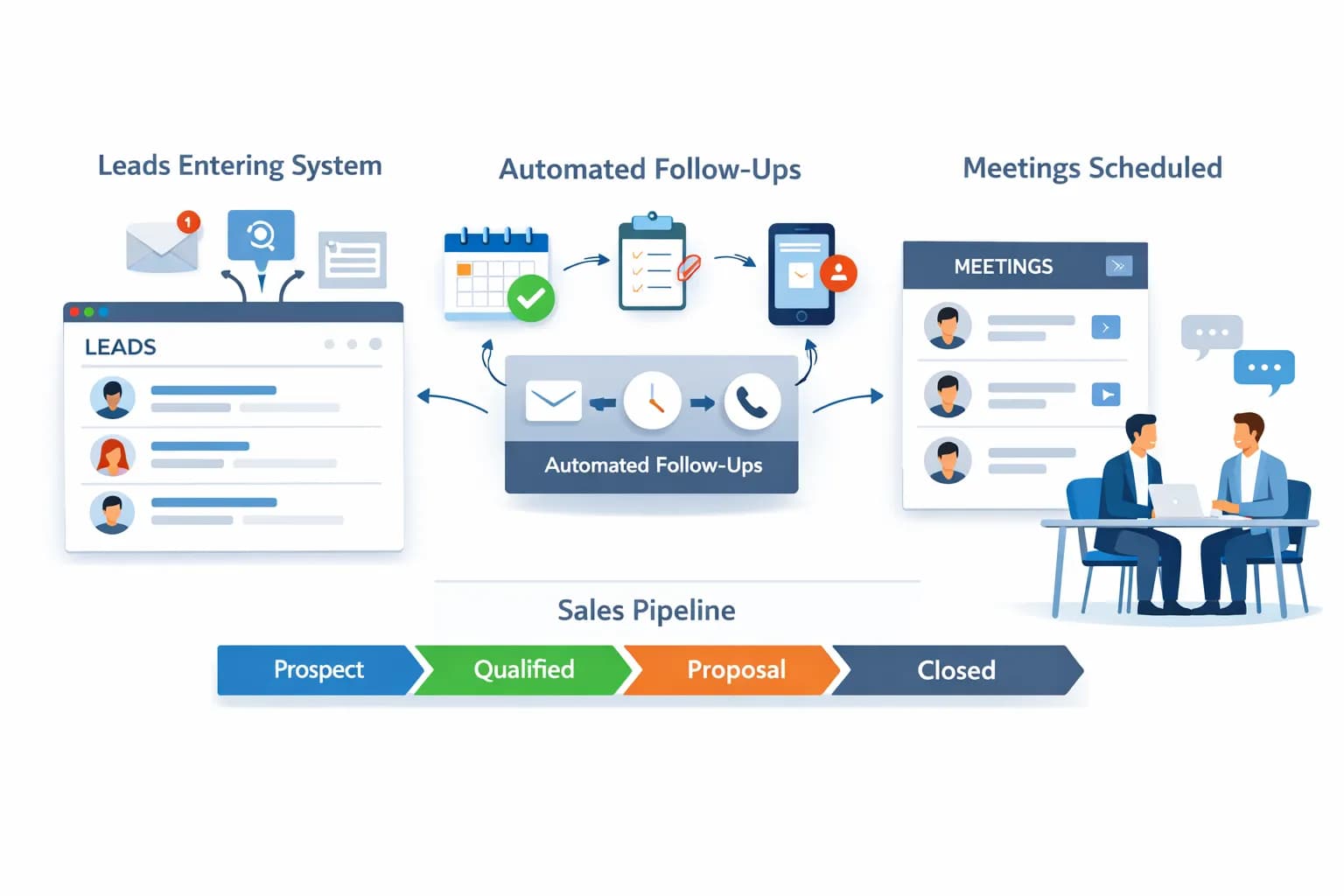
Step 1: Capture Every Inquiry
All inquiries—email, WhatsApp, website form, phone calls—go into one place.
This could be:
- A shared spreadsheet
- A simple tracking system
- Even a shared notebook (if you're really small)
The rule: If it's not logged, it doesn't exist.
Why this matters: You can't follow up with leads you forgot about.
Step 2: Respond Fast (With a Template)
When a lead comes in, someone responds within 2 hours (during business hours).
You don't need to write a custom email every time. Use templates:
Template 1 (General Inquiry): "Hi [Name], thanks for reaching out about [topic]. I'll review your details and get back to you with specifics by [time]. In the meantime, here's [helpful resource]."
Template 2 (Specific Request): "Hi [Name], thanks for your interest in [service]. Based on what you've shared, here's what I'd recommend: [brief answer]. Would you like to schedule a quick call to discuss details?"
Templates save time. But personalize the key parts (name, topic, specific need).
Step 3: Nurture With Context
Not every lead is ready to buy today. Some need time.
Set up a simple follow-up rhythm:
- Day 1: Initial response
- Day 3: Follow up if no reply
- Day 7: Share helpful resource
- Day 14: Final check-in
The key: Each follow-up adds value. Don't just say "following up." Share something useful.
Example: "Hi [Name], I know you're evaluating options. I thought this case study might be helpful—it's about a company similar to yours that faced [similar problem]."
Step 4: Qualify Before Calling
Before you schedule a meeting, make sure the lead is a good fit.
Ask qualifying questions (in your contact form or first email):
- What's your current situation?
- What are you trying to solve?
- What's your timeline?
- What's your budget range?
Why this matters: You're not wasting time on leads who aren't ready or aren't a fit. And serious leads appreciate that you're being thoughtful.
Real Examples: What This Looks Like in Practice
Example 1: Small Consulting Firm (Ahmedabad)
Team size: 2 people (owner + associate)
What they automated:
- All inquiries logged in shared spreadsheet
- Owner handles high-value leads, associate handles smaller ones
- Standard templates for first response and follow-ups
- Weekly 15-minute review of all open leads
Tools used: Google Sheets, Gmail templates, calendar reminders
Result: No more forgotten leads. Response time went from "whenever we remember" to "within 2 hours." Conversion rate improved by 35%.
Example 2: B2B Service Provider (Bangalore)
Team size: 5 people (3 salespeople)
What they automated:
- Inquiry form asks qualifying questions upfront
- Leads automatically assigned based on service type
- Each salesperson has response templates
- Manager reviews all leads older than 7 days
Tools used: Simple form builder, shared tracking sheet, email templates
Result: Sales team stopped fighting over leads. No more duplicate follow-ups. Better lead quality because of upfront qualification.
Example 3: Digital Agency (Mumbai)
Team size: 4 people
What they automated:
- All inquiries (email, WhatsApp, website) logged in one place
- Automatic "We got your message" response
- Follow-up schedule: Day 1, Day 3, Day 7
- Monthly email to leads who went cold
Tools used: Basic automation for acknowledgment, manual for everything else
Result: Converting website visitors to meetings became predictable. They know exactly how many inquiries convert at each stage.
Common Mistakes Small Teams Make
Mistake 1: Buying Tools Before Building Process
You don't need software. You need a process.
Build the process manually first. Then, if you're doing it consistently, consider tools to make it easier.
Mistake 2: Over-Automating
Not everything should be automated. Personal responses build trust. Automated responses feel cold.
Automate the tracking and reminders. Keep the conversations human.
Mistake 3: No Ownership
Automation doesn't mean "no one is responsible." It means everyone knows who's responsible for what.
Assign leads. Track progress. Review regularly.
What "Automation" Really Means for Small Teams
Here's the mindset shift:
Automation isn't about replacing people. It's about making sure people don't forget.
- You automate logging inquiries (so nothing gets lost)
- You automate reminders (so follow-ups happen on time)
- You automate templates (so responses are fast and consistent)
But you don't automate relationships. Those stay human.
How to Start This Week
You don't need a big project. Start small:
Week 1: Create one place to log all inquiries
Week 2: Write 3 response templates (general inquiry, specific request, follow-up)
Week 3: Set up a simple follow-up schedule (Day 1, Day 3, Day 7)
Week 4: Review what's working and adjust
That's it. You're not building enterprise software. You're building a simple sales system that fits your team.
The Real Goal: Consistency, Not Complexity
Sales automation for small teams isn't about fancy tools or complex workflows.
It's about:
- Capturing every lead
- Responding fast
- Following up consistently
- Qualifying before you invest time
You don't need a big budget. You need discipline and structure.
And if you want to see how a structured approach to sales can work for small teams, learn more about building lead-to-meeting systems that fit MSME teams.
But even if you build this yourself, the principle stays the same: Structure beats tools. Every time.
About the Author: Ashish Bansal is the Founder & Systems Strategist at ShivAstra. He helps Indian MSMEs transition from manual hustle to automated growth systems, focusing on practical sales automation and content strategy without enterprise complexity.
Internal Linking Opportunities
- Link to: Why Manual Lead Follow-Up Is Killing Your Small Business Sales (Blog #2)
- Link to: How to Convert Website Visitors Into Sales Meetings (Without Cold Calling) (Blog #7)
- Link to: How to Qualify Leads Before They Waste Your Time (Blog #9 - future)
- Link to: Topic pillar page for "Sales Automation & Lead Management"
- Link to: Author profile page
Word Count: ~1,650 words
Reading Time: ~7 minutes
Tone: Calm, practical, operator mindset
CTA: Educational with subtle service reference
Ready to Transform Your Business?
Join our community and get expert guidance on growing your business.
Get StartedAbout the Author
ShivAstra Team
ShivAstra Team is a group of automation strategists, content specialists, and business system designers focused on helping Indian MSMEs grow through structured sales systems, automation workflows, and practical digital strategies. The team researches real-world business challenges and publishes insights on lead generation, automation, and scalable growth systems.
Ready to scale your business?
Get your free ShivAstra Business Report and see where you can automate and grow.
Get Your Free Report